
Building a Culture of Preparedness: DCA Employees has Completed Disaster Preparedness Seminar
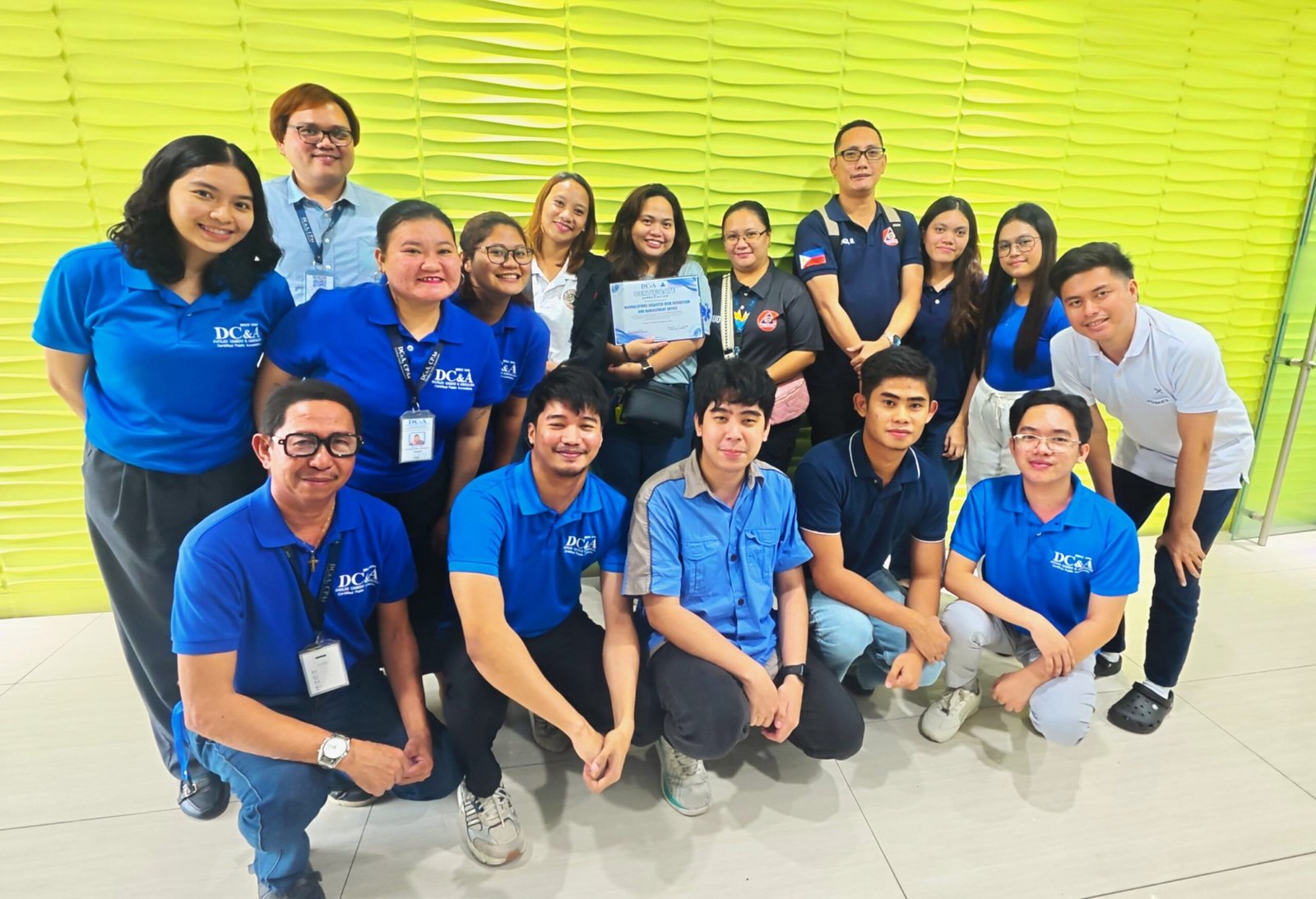
DCA staffs with resource speakers from the Mandaluyong City Disaster Risk Reduction and Management Office after the Disaster Preparedness Training and Seminar.
DCA employees participated in a Disaster Preparedness Training and Seminar conducted by the Mandaluyong City Disaster Risk Reduction and Management Office (MDRRMO) on September 18, 2026. The activity reinforced the firm’s commitment to workplace safety by equipping employees with practical knowledge for responding to earthquakes, fires, severe weather, and other emergencies.
Understanding the Risks Around Us
MDRRMO resource speakers discussed hazards that may occur with little or no warning, including earthquakes, typhoons, thunderstorms, flooding, fires, and tsunamis. Particular attention was given to the potential effects of a major earthquake—strong ground movement, falling debris, structural damage, service interruptions, blocked roads, and limited access to emergency assistance.
Earthquake Safety: Duck, Cover, and Hold
Employees reviewed the Duck–Cover–Hold procedure: get low to avoid being knocked down, protect the head and neck beneath a sturdy table or desk when available, and hold on until the shaking stops. They were also reminded to keep away from windows, glass, cabinets, and unsecured objects. Once conditions permit, employees should evacuate carefully, avoid damaged structures, and proceed to the designated assembly area in accordance with official instructions.
Evacuation and Personal Preparedness
The seminar emphasized the importance of knowing evacuation routes, assembly points, and official sources of emergency information. Potential holding areas discussed included Mandala Park, Don Bosco Football Field/Open Field, and Wack-Wack Golf and Country Club.
Employees were encouraged to maintain a personal Go Bag containing drinking water, ready-to-eat food, a flashlight and batteries, first-aid supplies, essential medicines, a whistle, extra clothing, hygiene items, copies of important documents, a mobile phone, charging equipment, and other basic necessities. Preparing these items in advance can improve safety and reduce delays during an evacuation.
Fire Safety and the PASS Method
Fire safety guidance covered the location of exits and evacuation routes, the need to keep passageways unobstructed, and the importance of reporting smoke or fire immediately. Employees also reviewed the PASS method for operating a fire extinguisher: Pull the pin, Aim at the base of the fire, Squeeze the handle, and Sweep from side to side. An extinguisher should be used only for a small, manageable fire when a clear escape route is available.
Weather Awareness and Reliable Information
The session also reviewed basic distinctions between weather and climate and the risks associated with thunderstorms and typhoons. Employees were advised to monitor official advisories, avoid relying on unverified information, and promptly follow safety instructions during severe weather conditions.
Preparedness Is a Shared Responsibility
Effective disaster response requires coordination among individuals, workplaces, communities, local governments, and national agencies. The training introduced roles such as Early Warning Disseminators, First Responders, Resource Mobilizers, and Risk Assessors and Planners, illustrating how clear responsibilities and communication channels support an organized response.
DCA’s Continuing Commitment to Safety
DCA will continue strengthening workplace preparedness through earthquake and fire drills, visible evacuation maps and emergency signs, routine inspection of emergency equipment, updated contact information, designated response roles, and periodic refresher training. These measures help ensure that employees understand what to do, where to go, and whom to contact when an emergency occurs.
The seminar underscored a simple but essential message: emergencies cannot always be predicted, but informed preparation can help everyone respond more calmly, appropriately, and safely. Preparedness begins with awareness—and safety is everyone’s responsibility. This commitment is captured in DCA’s preparedness tagline: “Disaster-ready, Committed, and Alert.”